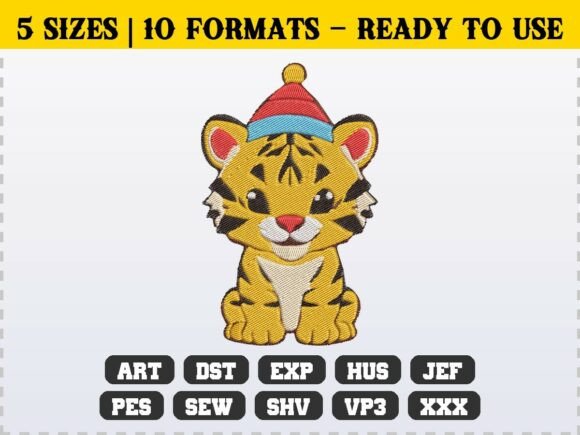
Nursery Cute Tiger Christmas Embroidery Review
As I set up my booth for the upcoming weekend craft fair, the table is a chaotic mix of fabrics, hoops, and half-finished samples. The goal is simple: identify which machine embroidery design will stop shoppers in their tracks and convert into sales. Today, I am putting Nursery Cute Tiger Christmas Embroidery under the microscope. This design promises adorable jungle charm with a festive twist, featuring a baby tiger cub in a red and blue hat. Before I commit to a full batch production run, I need to know if this embroidery file translates from screen to fabric effectively enough to justify the thread costs and machine time.
First Impressions: Festive Charm Meets Modern Cuteness
The first thing that strikes me about Nursery Cute Tiger Christmas Embroidery is its immediate emotional appeal. It does not feel rustic or farmhouse; instead, it leans heavily into a modern, playful aesthetic. The concept of a sweet little tiger cub with big, expressive eyes wearing a festive hat creates an instant connection with parents and gift buyers. In the crowded landscape of holiday markets, designs that evoke warmth and nostalgia perform exceptionally well. This pattern feels soft yet bold enough to stand out against neutral backgrounds. It is not merely decorative; it tells a story of holiday joy through a lens of animal cuteness, making it a strong contender for a handmade product line targeting families and nurseries.
Evaluating Product Placement for Maximum Impact
When considering where to apply this design, the versatility of the tiger motif becomes apparent. However, not every application will yield the same results. For my booth display, I plan to test Nursery Cute Tiger Christmas Embroidery on a few key items to see how it holds up in person.
- Tote Bags: A canvas tote bag offers a large, flat surface perfect for this design. The contrast between the tiger's orange stripes and the white or cream fabric will make the image pop. As a tote bag design, it serves as a conversation starter, ideal for eco-conscious shoppers looking for unique holiday gifts.
- Kitchen Textiles: Apron embroidery and tea towel embroidery are perennial sellers. Placing the tiger on a linen apron adds a whimsical touch to kitchen decor. The festive hat element makes it seasonally relevant without being overly traditional, appealing to those who want a modern take on Christmas decor.
- Accessories: Small items like caps and fabric pouches are excellent for impulse buys. An embroidered patch version of this tiger could be sewn onto denim jackets or backpacks, expanding the market reach beyond home goods.
- Pillow Covers: For a larger statement piece, a pillow cover allows the design to breathe. The big, expressive eyes of the tiger will be clearly visible from a distance, drawing attention across the aisle.
Practical Production Considerations for Craft Fair Sellers
While the visual appeal is high, the practicality of producing this design at scale is paramount for any small shop product owner. When reviewing the digital embroidery file, I must consider how the design behaves during stitching. The description mentions "big, expressive eyes," which suggests areas of detail that require precision. If the stitch count is too low, the eyes may look pixelated; if too high, they might pucker the fabric.
For commercial embroidery purposes, efficiency is key. I need to ensure that the design can be hooped quickly and stitched without constant intervention. The use of red and blue thread colors for the hat is standard, but I must verify that these threads do not bleed into the lighter fur tones. Additionally, the density of the stitches is critical. If the stitch density is too heavy, it could stiffen the fabric, making a soft tea towel feel rigid and unappealing to the touch. Customers at a craft fair often judge quality by feel, so maintaining fabric drape is essential.
Visual Appeal and Customer Engagement
In a busy market environment, visual clarity wins. Nursery Cute Tiger Christmas Embroidery succeeds here because the subject matter is universally understood. A tiger is distinct, and the addition of the festive hat immediately signals the holiday theme. This dual recognition helps capture customer attention quickly. For an Etsy seller creating online listings, this design photographs beautifully. The vibrant colors translate well to digital screens, making printable mockup images effective for showcasing potential products before they are even made.
The design also enhances brand consistency for boutique makers focusing on family-friendly or nursery-themed collections. By incorporating this tiger into a cohesive line of holiday goods, sellers can create a recognizable identity that encourages repeat business. The playful nature of the cub invites engagement, prompting customers to ask questions about the design, the process, and the materials used.
Critical Care Notes for High-Quality Results
To ensure the finished product meets professional standards, there are several technical hurdles to navigate. First, always test the design on scrap fabric similar to your final material. The texture of a woven tea towel differs significantly from smooth cotton, and this affects how the threads lay down. Fabric texture can obscure tiny details, so if the tiger's whiskers or facial features are too fine, they may get lost on a textured surface.
Second, pay close attention to the hoop size. If the design is large, it requires a larger hoop, which can be cumbersome for quick production runs. Conversely, if you attempt to shrink the design for a small cap or pouch, the details may become indistinct. Check the file specifications to confirm the minimum recommended size. Third, the choice of stabilizer is non-negotiable. A tear-away stabilizer might suffice for stable fabrics, but a cut-away or water-soluble option may be necessary for stretchy knits or delicate linens to prevent distortion.
Finally, consider the background color. While the tiger looks great on light fabrics, placing it on dark fabric requires careful consideration of thread contrast. The red and blue hat might disappear against a navy background, necessitating a change in thread colors or a backing layer to ensure visibility.
Designer Checklist Before Batch Production
Before committing to a full inventory for the weekend fair, I recommend following this checklist to avoid costly mistakes:
- Test Stitch: Run a sample on your intended fabric to check for puckering, skipped stitches, or thread tension issues.
- Verify Licensing: Confirm that the embroidery file includes a commercial license for selling finished goods. Do not assume personal use rights extend to craft fair product sales.
- Review Spacing: Ensure there is adequate space around the design for trimming or sewing if it is intended as a patch.
- Create Mockups: Produce at least one real physical mockup to photograph for social media and booth signage. Real photos sell better than digital renders.
- Compare Colors: Test different thread combinations to find the highest contrast ratio for the specific fabric you are using.
- Check File Integrity: Open the design assets in your preferred software to ensure all layers and object paths are correct before uploading to the machine.
Nursery Cute Tiger Christmas Embroidery has the potential to be a star performer in a holiday collection. Its blend of cute aesthetics and seasonal relevance makes it a compelling choice for handmade gifts. However, success lies in the execution. By respecting the technical requirements of the design and choosing the right applications, craft fair sellers and creative entrepreneurs can turn this digital file into a profitable, high-quality product line that delights customers and fills the cash register.